
Digital Gujarat Scholarship 2026: Everything Students Need to Know
Digital Gujarat Scholarship 2026: Let me be honest about something — most scholarship guides out there are either too vague or so stuffed with jargon that students give up halfway through. So I want to keep this straightforward. If you’re a student in Gujarat struggling to fund your education, the Digital Gujarat Scholarship portal might genuinely change things for you. Not in an exaggerated way. Just practically.
This guide covers how it works, who qualifies, what documents you need, and how to actually apply without running into the common traps that get applications rejected.

So What Is This Portal, Really?
The Digital Gujarat Scholarship is the state government’s attempt to bring all student financial aid schemes under one website. Earlier, students often had to visit multiple departments to apply for different scholarships — one office for SC schemes, another for OBC support, and separate channels for minority scholarships. It was a mess.
Now it’s centralized. You register once, pick the scheme that fits your background and education level, upload your documents, and track everything from the same dashboard. That’s genuinely useful, especially for first-generation college students who don’t have family members who’ve done this before.
Who Is Actually Eligible?
This is where people get confused. Each scholarship has its own eligibility criteria, so the requirements can vary from one scheme to another. But here’s the general picture:
You need to be a Gujarat resident. Not studying in Gujarat — actually residing there. There’s a difference and it matters during verification.

You must be enrolled in a recognized institution. Government-recognized. If your college or school isn’t on the approved list, your application won’t go through regardless of how strong your profile is.
Your category matters. The main groups covered are SC, ST, OBC, minority communities, and economically weaker sections. Some schemes have additional sub-criteria within these.
Income limits exist. Each scheme has a cap on family income. Cross that limit by even a small margin and you’re out. The specific numbers differ across schemes, so check those individually rather than assuming.
Academic standing. Some scholarship programs also require students to meet a certain minimum marks criterion. Nothing extreme usually, but again — verify per scheme.
Eligibility Factor General Requirement
State Residency Gujarat domicile required
Institution Type Must be government-recognized
Applicant Categories SC, ST, OBC, Minority & EWS
Family Income Within scheme-specific limits
Academic Record Minimum marks (varies)
Available Scholarship Types
Five main scholarship categories exist on the portal right now:
Post Matric Scholarship — For SC, ST, and OBC students studying after Class 10. This one has decent coverage and is probably the most applied-for scheme.
Pre-Matric Scholarship — Created to support students studying between Class 1 and Class 10. Worth applying if your family income qualifies, even for smaller amounts.
Merit-Cum-Means Scholarship — This one is specifically for students who have both financial need AND decent academic performance. You need both to qualify. One without the other won’t work.
Minority Scholarship — Targeted at students from minority religious communities. Separate criteria, so read those carefully if this applies to you.
Higher Education Scholarship — Offers financial assistance to students enrolled in undergraduate and postgraduate courses. Broader in scope, but competitive.
Pick the right one before you start filling anything out. Applying under the wrong category is one of the most common mistakes — and it wastes everyone’s time including yours.
Documents — Get These Ready Before You Even Open the Portal
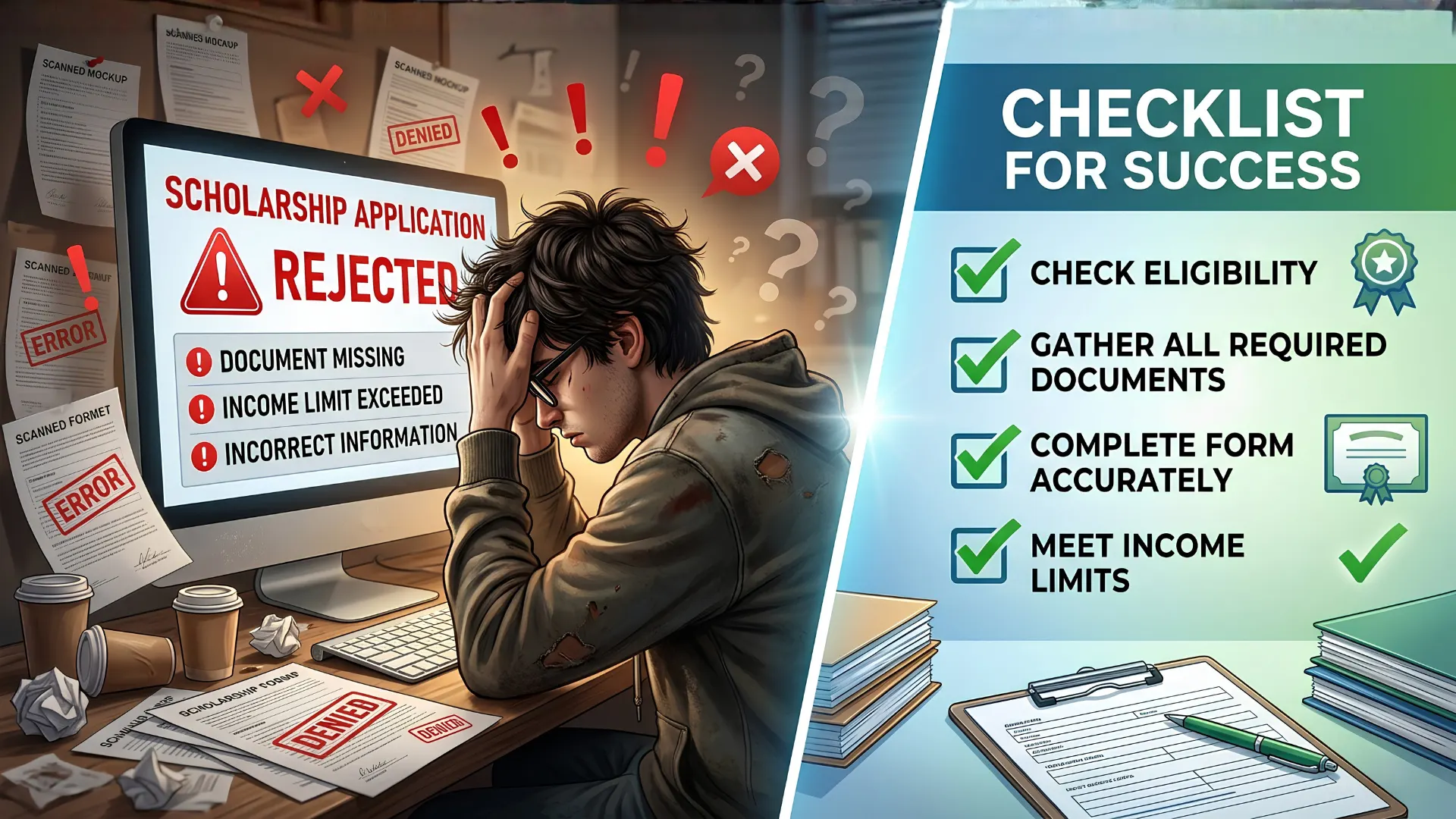
Many students run into trouble when they begin filling out the application and suddenly realize an important document hasn’t been scanned or uploaded yet. Then they rush, upload a blurry photo of a document, and the application gets flagged. Avoid that entirely.
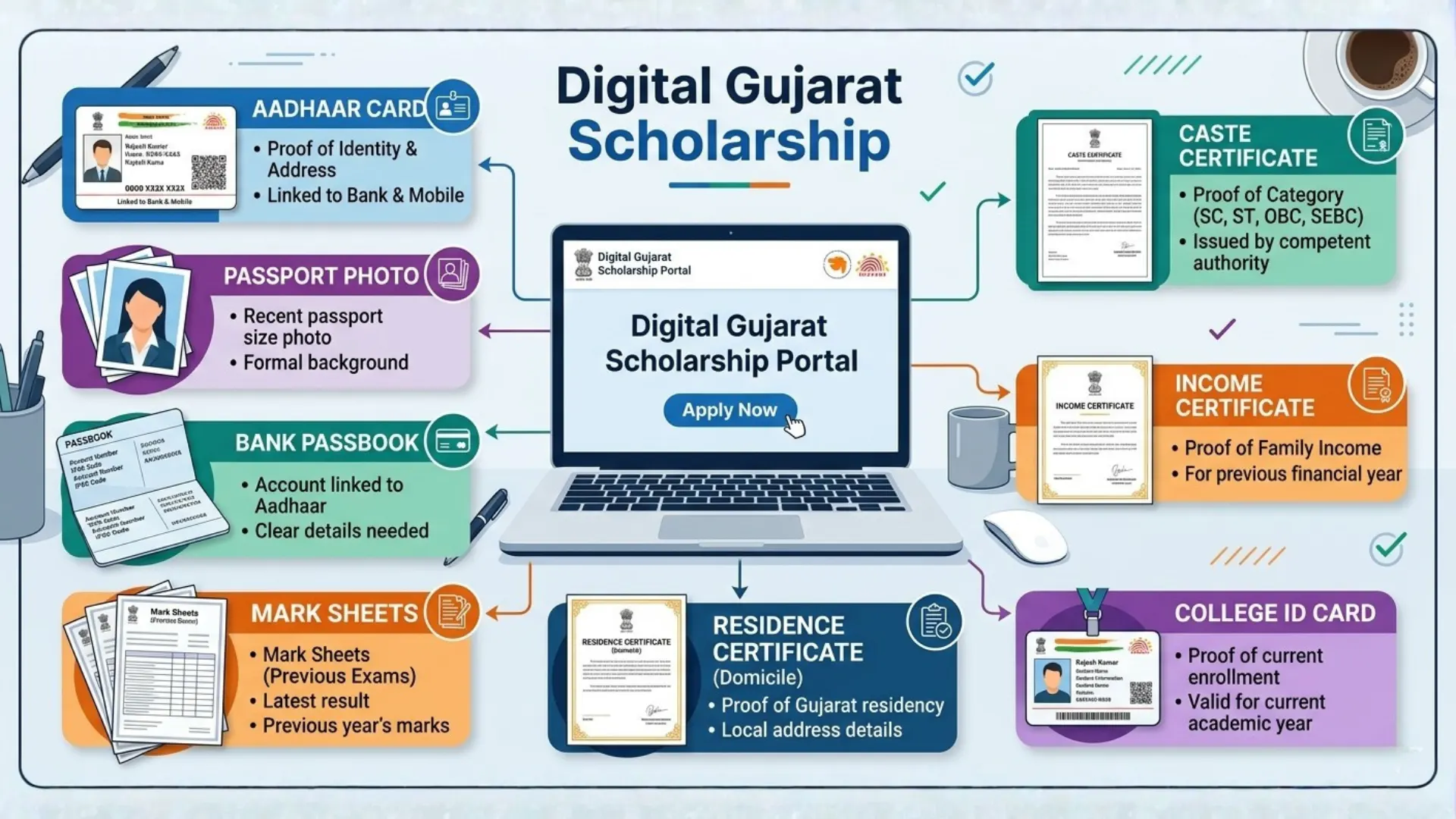
Here’s what you’ll need:
Document What It’s Used For
Aadhaar Card Identity verification
Passport-size Photo Profile photo
Income Certificate Proves financial eligibility
Caste Certificate Category confirmation
Previous Year Mark Sheets Academic record
School or College ID Confirms current enrollment
Bank Passbook (first page) For direct fund transfer
Residence Certificate Address proof
Scan everything clearly. Good lighting, no shadows, full document visible. The portal does have file size limits, so compress if needed — but don’t compress so much that text becomes unreadable.
The Application Process, Step by Step
Step 1: Go to the official Digital Gujarat portal.
Don’t use third-party links. Type the official URL directly or search carefully — there are copycat sites that collect your data.
Step 2: Register with your mobile number.
You’ll get an OTP. Keep your phone nearby. The registration form asks for basic personal details — fill them exactly as they appear on your Aadhaar.
Step 3: Log in and open your dashboard.
Once registered, your dashboard shows all available schemes you may be eligible for.
Step 4: Select your scholarship scheme.
Read the eligibility summary for each one before selecting. Don’t guess.
Step 5: Fill out the application form.
Take your time here. Spelling mistakes in names, wrong dates, mismatched details between your documents and the form — all of these cause problems during verification.
Step 6: Upload your documents.
Each document field specifies the accepted format and size. Follow those exactly.
Step 7: Review everything before submitting.
There’s usually a preview screen. Use it. Check every field. Once submitted, edits aren’t always possible.
Step 8: Note your application reference number.
Screenshot it. You’ll need it when checking status or raising a query.
Step 9: Track your status.
Log in periodically to check progress. Sometimes the portal requests additional documents or flags something — and students miss that notification entirely.
Why Applications Get Rejected (And How to Not Be That Student)
Rejection reasons are fairly predictable once you’ve seen enough applications:
Wrong information entered. Someone typed their name as it appears on their Facebook profile, not their Aadhaar. Small thing. Huge problem.
Documents missing or incomplete. Not uploading all required files is an automatic rejection.
Income above the limit. If your family’s income is above the cap — even slightly — the system won’t approve it. There’s no gray area here.
Submitting multiple applications. Don’t do this thinking it improves your chances. It gets all submissions disqualified.
Expired or invalid certificates. Caste and income certificates have validity periods. An expired document is treated the same as no document.
Small Things That Make a Difference
A few things that don’t sound important but actually are:
Your bank account must be in your own name, not a parent’s. Some schemes are strict about this. A joint account may or may not be accepted depending on the scheme — clarify before submitting.
Apply well before the deadline. The portal often slows down or experiences issues in the final days before closing. Students who apply in the last 48 hours regularly face technical problems and then miss out.
If you’re unsure about any step, platforms like Confirm Scholarship break down individual scheme requirements and keep track of deadline changes — worth following, especially if this is your first application.
Check your spam folder after registering. Confirmation emails sometimes land there and students assume registration didn’t work, so they register again — which creates duplicate accounts and complications later.
FAQs
Is this scholarship only for financially weaker students?
Not entirely. Some schemes are purely merit-based or a combination of merit and financial need. The Merit-Cum-Means scholarship, for example, looks at both.
Can I apply for more than one scheme?
Generally no — most schemes allow one active application at a time. Read the specific scheme terms.
What happens after I submit my application?
It goes through a verification process — typically involving your institution and then the relevant government department. This takes time, so don’t expect instant confirmation.
My application was rejected. Can I appeal?
Yes, most schemes have a grievance mechanism. Log into your dashboard and look for the grievance or appeal option. You’ll usually need your reference number.
Do I need to reapply every year?
For most recurring scholarships, yes. Renewal applications are separate from fresh applications.
How long does it take to receive the money?
Once approved, funds are transferred directly to your bank account. Timelines vary — a few weeks to a few months depending on the scheme and verification speed.
A Final Note
The Digital Gujarat Scholarship exists because enough people recognized that financial pressure pushes students out of school and college — not lack of ability or ambition. If you’re eligible, using it isn’t taking a handout. It’s accessing something that was set up specifically for your situation.
Apply carefully. Apply on time. And if someone you know qualifies but hasn’t heard about this, pass this along. Awareness is half the problem.